
1937 John Deere Steel Plow Neil M Clark FEI Stamp 1944 WWII Research Copy Rare
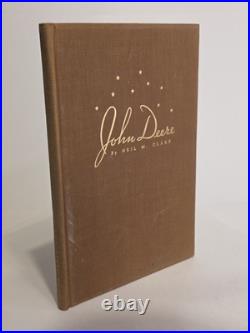
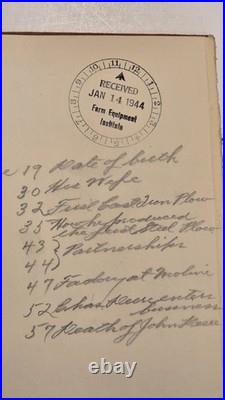
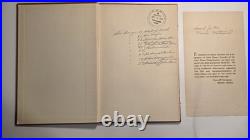

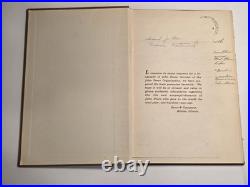
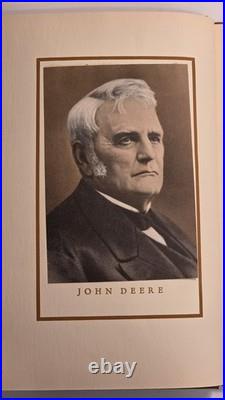
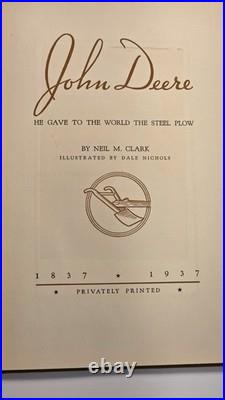
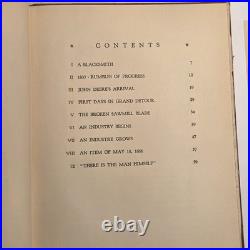
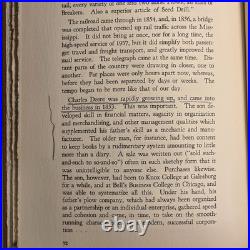

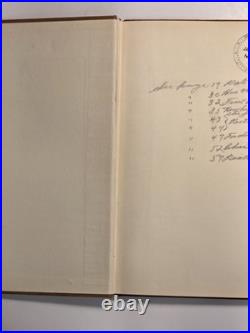
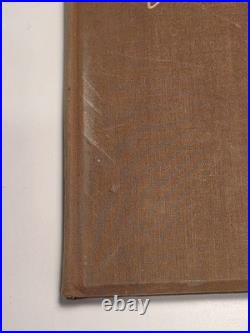

Found in the bottom of a dusty box in northern Gary, Indiana – literally minutes from the old Chicago Farm Equipment Institute office at the Board of Trade Building, 141 West Jackson Boulevard. THIS 1937 book might have been THE one that helped save John Deere during World War II. I’m not being dramatic. I believe this is a piece of lost history in the almost 200 year old story of this iconic American manufacturing titan. Read the story below, look at the photos of the researcher’s own handwritten notes and academic-style underlining, and message me back if you think this possibility doesn’t hold water. A small group of 4 amateur researchers who examined this rare “region” find all came to the same conclusion: the evidence is there. Farm Equipment Institute office at the Board of Trade Building. The War Production Board is rationing every ton of steel for tanks and shells. American farms still have to feed the troops and the Allies – Food Will Win the War. A researcher (clearly educated and methodical – see the college-level sideline marks and precise underlining) sits down with THIS exact copy. He reaches for the hand-crank pencil sharpener. Then he starts making notes and marking the pages that matter. Page 19 – birth. Page 30 – wife and baby Charles. Page 35 – first cast-iron plow, then the breakthrough steel plow made from a broken sawmill blade (core ingenuity story). Page 39 – business instincts. Page 43 – partnership with Major Andrus (underlined “John Deere’s partner”). Page 52 – Charles Deere enters the business in 1853 (heavily underlined). Page 57 – death. On the original info slip he wrote “Issued for the Deere Centennial” reminding him that this business has been around for over a hundred years in 1944. From a forensic perspective these notes look exactly like prep work for a lobbying presentation or memo to someone who was “consequential”. Why else flag the steel-plow origin story and business-growth timeline so precisely, right when the FEI was fighting for extra materials for their members? John Deere & Company in Moline was one of the FEI’s biggest members – they printed these centennial books and routinely supplied their historical material to the association for just such purposes. It is entirely plausible this copy was sent from Moline to arm them to successfully lobby for material to build tractors and fill orders during the height of national steel rationing. One well-timed steel-plow anecdote in the right memo or one well researched highlight reel of a company that has (for over 100 years) turned saw blades into plows and kept America fed because of it could have helped keep Moline’s production lines open just long enough to survive the war. If that happened, then the researcher who held THIS VERY book may have played a small but real role in keeping John Deere alive through the 1940s and beyond. This book may have saved the company! So, it is with great pride that I’m offering a very unique book to the corporate collectors of one of America’s finest manufacturers today. For sale is that EXACT 1937 privately printed first edition book – John Deere: He Gave to the World the Steel Plow by Neil M. Issued for the 100th anniversary of the 1837 invention. Key highlights (all present). Farm Equipment Institute library stamp – RECEIVED JAN 14 1944 (this stamp is huge). Original loose “Issued for the Deere Centennial” slip with handwritten note. Researcher’s handwritten timeline + academic-style underlining & sideline marks. Real tipped-in sepia portrait of John Deere (in many copies this picture is missing). Full brown cloth with gilt stars and script, printed by Desaulniers & Company, Moline; illustrated by Dale Nichols. Binding tight, pages clean, photo perfect. Moderate scuffing/rubbing on the front cover cloth (shown in photos) plus light shelf wear – nothing structural. The structure is fantastic for a book that is nearing 100 years old. Tiny edge nicks on the slip. This is a documented piece of American industrial history with a tantalizing “what-if” story attached. If you collect corporate John Deere memorabilia or ag-history artifacts that actually mattered, this one is special. Message with questions – more photos available. Thank you very much for reading about this very interesting book. Here’s a bit from one of the researchers. The core facts are historically accurate and well-documented. Steel and material rationing was real and very severe for the American farmer. Starting in 1941-42, the War Production Board (WPB) capped new farm equipment at roughly 80% of 1940 levels (some categories dropped even lower by 1943). The Farm Equipment Institute (FEI) was actively lobbying the WPB in exactly 1944. The FEI the official trade association for John Deere, International Harvester, Case, etc. Met regularly with the WPB to fight for better allocations. They argued that America needed more farm equipment to keep food production high – the exact slogan was Food Will Win the War. John Deere was one of the FEI’s biggest members and routinely supplied historical material to help make their case. John Deere was definitely impacted but pivoted for survival. They converted part of their plants to war work tank transmissions, aircraft parts, etc. , but civilian tractor output was still restricted. Without successful lobbying for extra materials, the domestic side of the business could have been crippled further – not “bankruptcy tomorrow, ” but definitely a long-term threat to growth and survival in the postwar boom. So the “researcher using this book to prep a lobbying memo in January 1944″ scenario is entirely plausible. The FEI stamp + handwritten notes + underlining on the exact pages that highlight ingenuity-with-limited-resources the broken sawmill blade story, Charles Deere stepping in, etc. Fit the timeline and the FEI’s real tactics perfectly. A serious collector will see that and think wow, this is a cool piece of corporate provenance. The dramatic line “this book might have saved John Deere” is interpretive storytelling – it’s the fun “what-if” hook – but it’s built on real history, not fantasy. No knowledgeable JD guy is going to call it out as fake; at worst they’ll smile and say that’s a stretch, but the stamp and notes are legit. Serious collectors will get the value here. It’s legitimately an awesome find!